
Overview of Implant Placement
The Dental Implant Surgical Procedure
The procedure to place a dental implant takes 30 to 60 minutes for one implant and only 2 to 3 hours for multiple implants. The number of appointments and time required, vary from patient to patient. Dr. Burns will bring great precision and attention to the details of your case.
Prior to surgery, you may receive antibiotics and for greater comfort, intravenous sedation or nitrous oxide (laughing gas). These options are discussed with you at your consultation appointment. A local anesthetic will be administered to numb the area where the dental implant will be placed.
When you are comfortable, Dr. Burns will make a small incision in the gum tissue to reveal the bone, prepare the bone for the implant utilizing specialized instruments, and gently insert the titanium implant.
Frequently, a cap (healing abutment) is placed after implant placement and is visible. Sometimes it is better in the early stages of healing to have the implant covered by the gum tissue. Dr. Burns will perform a specific test on the implant in order to determine if the implant needs to be covered with gum tissue or have a healing abutment placed.
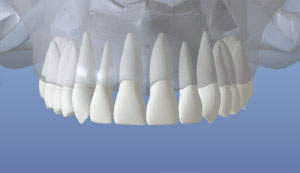
1. Normal
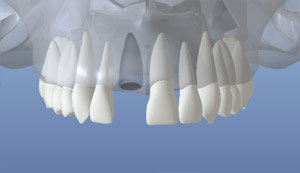
2. Tooth Loss: socket (alveolar ridge) preservation grafting usually recommended after extraction
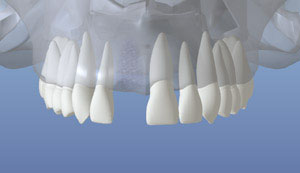
3. Healed Bone
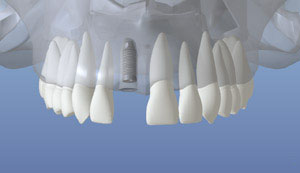
4. Implant Placed
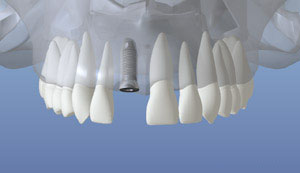
5. Healing
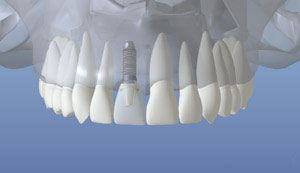
6. Implant Restored
Healing after Dental Implant Surgery
Now the healing begins. The length of time varies from person to person, depending upon the quality and quantity of bone. A typical amount of time necessary for healing is four months. However, sometimes the implant area will need longer amounts of time for healing to occur. Dr. Burns will advise you on follow-up care and timing for your specific needs.
Dental Implants Presentation
To provide you with a better understanding of dental implants, we have provided the following multimedia presentation. Many common questions pertaining to dental implants are discussed.

DENTAL IMPLANT FAQ
When are dental implants placed?
Implants are often placed several months after extraction. Separating the extraction procedure from the implant placement gives the extraction socket and/or the bone graft placed in the socket (socket preservation graft) time to heal.
At times, an implant may be placed immediately after extraction of a tooth. This may involve a little more risk. The main benefit of immediate implant placement at time of extraction is the decrease in the time from implant placement to final restoration. When infection or other problems with the bone are present, immediate implant placement is not the best treatment.
If your tooth has been missing for some time, the adjacent support bone is likely to grow thinner and shrink. This occurs because the root of the natural tooth has to be present to stimulate the bone. As much as one third of your jaw’s thickness can be lost in the year following tooth extraction. If you are missing enough bone, you may benefit from having additional bone grafted into the area. This ensures the implant will be adequately supported when it is placed in the jaw.
How many implants do I need?
Most frequently, one implant per missing tooth is placed. In some instances, multiple teeth can be placed on fewer implants (implant-supported bridge), but this strategy may increase the risk for implant failure. Because many of the larger teeth in the back of your jaws have two or three roots, the most common approach is to replace missing back teeth with larger implants.
When will I have my final restorations placed?
In some cases (hybrid denture), the restoring dentist will place the restoration at the time of implant placement. Whether it’s one tooth or all of your teeth that are being replaced, your dentist will complete the restoration by fitting the replacement tooth (crown) to the dental implant.