Sinus Lift
What is a Sinus Lift?
The maxillary sinuses are behind your cheeks and on top of your upper posterior teeth (premolars and molars). These sinuses are air-filled spaces that are lined with a covering called the sinus membrane. Often the roots of the upper teeth extend up into the maxillary sinuses. When these upper teeth are removed, there is often just a thin wall of bone that separates the maxillary sinus and the mouth.
Dental Implants need bone to hold them in place. When the sinus wall is very thin, it is impossible to place dental implants in this bone. If insufficient bone is present due to the position of the maxillary sinus, a sinus augmentation (sinus lift with grafting) can raise the sinus floor and allow for new bone formation.
A sinus lift is one of the most common bone grafting procedures performed to increase bone in preparation for implant placement. The procedure promotes bone growth in the floor of the maxillary sinus which enables dental implants to be secured in the new bone.
Will I Need a Sinus Lift Procedure?
A sinus lift may be necessary if:
- you are seeking to replace lost teeth in the posterior upper jaw using dental implants, and
- the maxillary sinuses are in a position to prevent the placement of those implants.
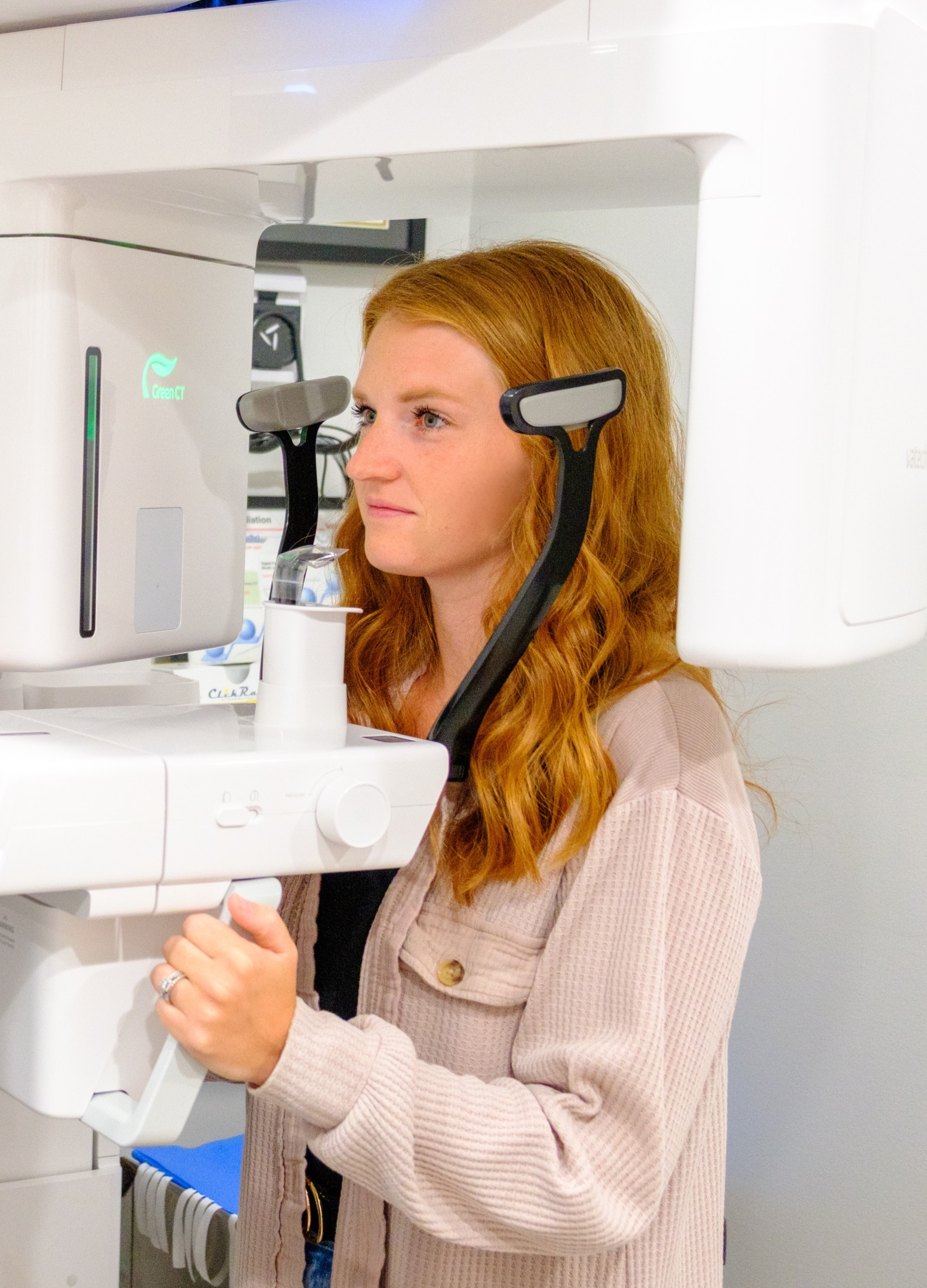
Dr. Burns will evaluate your sinus using Cone Beam Computed Tomography (CBCT) to assess the sinus health and any anatomic difficulties associated with the planned procedure.
How is a Sinus Lift Performed?
Patient comfort is our first and primary concern. For this reason, Dr. Burns will anesthetize the area. Sedation procedures may also be used per individual patient’s needs.
After profound anesthesia is in place, an incision is made in the area nearest the sinus to be augmented. Through the incision, a small window is cut into the maxillary sinus, and the sinus membrane (the soft lining inside the sinus bone) is pushed upward. A space is created when the membrane is elevated, and into this space bone grafting material is placed.
After the bone is safely placed under the sinus membrane, the incision is sutured and the healing process begins.
After several months of healing and growth, the grafted bone becomes part of the patient’s jaw and dental implants can be placed and stabilized in the newly formed sinus bone. In certain situations, Dr. Burns may be able to place the dental implants at the same time as the sinus lift procedure. During treatment planning using CBCT, Dr. Burns will assess if immediate implant placement at the time of sinus lifting is possible.